About Rumi
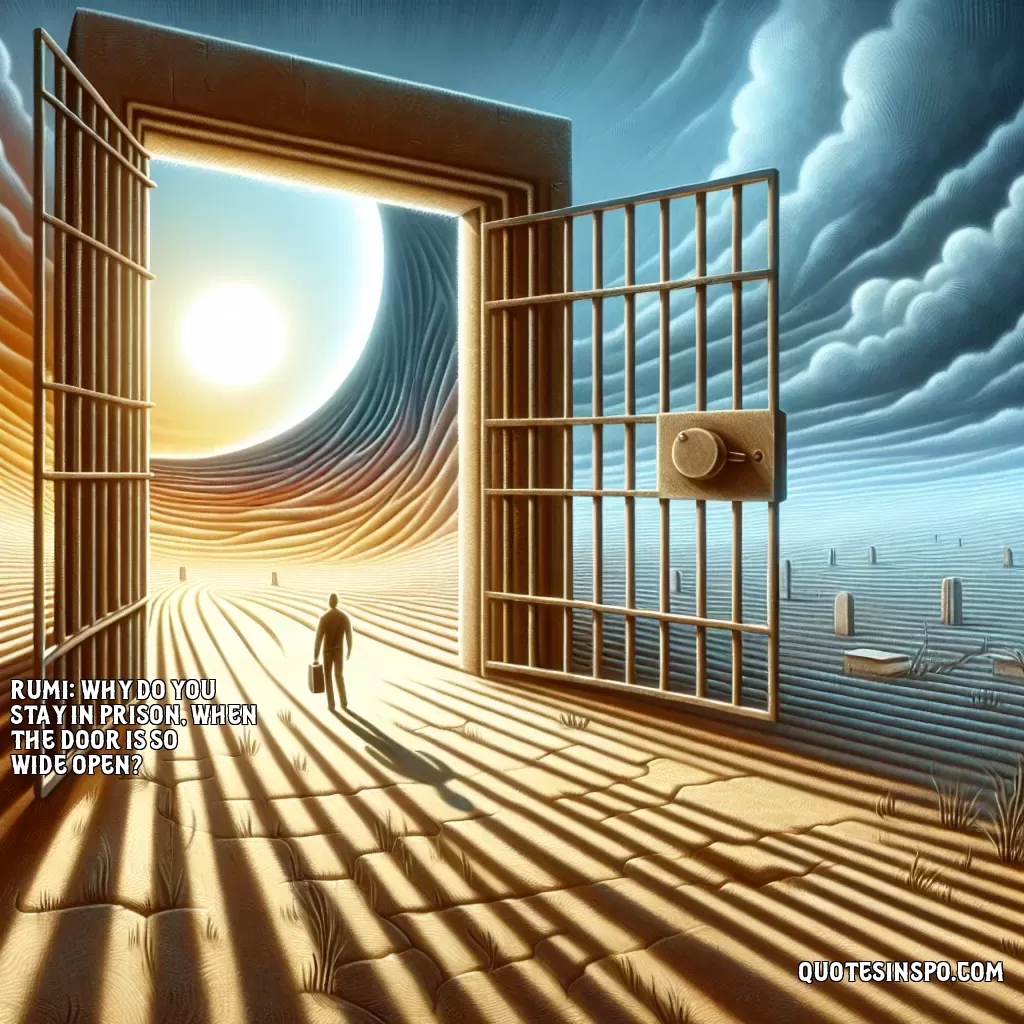
Rumi, a 13th-century Persian poet, is celebrated for his profound contributions to the genre of mystical poetry. His work primarily explores themes of love, spirituality, and the human connection to the divine, resonating with readers across centuries and cultures. Rumi's writing style is characterized by its lyrical beauty and deep philosophical insights, often employing metaphor and allegory to convey complex spiritual concepts.
Readers are drawn to Rumi's ability to articulate the ineffable experiences of love and longing, both earthly and divine. His poetry, often compiled in collections like the "Masnavi" and "Diwan-e Shams-e Tabrizi," is revered for its capacity to inspire introspection and spiritual awakening. Rumi's work transcends religious and cultural boundaries, appealing to a universal audience seeking meaning and connection.
Despite the passage of time, Rumi's poetry remains relevant, offering solace and inspiration to those navigating the complexities of life. His words continue to be celebrated for their timeless wisdom and the way they effortlessly bridge the gap between the mundane and the mystical.